How to reduce the use of AI
Saturday, September 19, 2026
TL;DR
Cutting unnecessary AI use is a deliberate program of audit, limits, and human-first replacements that protects skills, privacy, and energy. This post shows an actionable five-step setup, decision table, and concrete controls that let organizations reduce AI reliance while keeping productivity and compliance intact.
By Jordan Reed · Published · 7 min read





"AI systems should be designed to respect human rights and democratic values." — OECD, OECD AI Principles (2019)
Introduction
Excessive AI use is eroding decision skills, increasing energy demand, and entangling organizations in opaque systems; this matters now because dependence grows faster than governance. The thesis: organizations should move from automatic substitution to an Intentional AI Reduction structure (IARF) that limits AI to tasks where it clearly improves outcomes.

Where This Falls Down
Reducing AI use can backfire when speed or scale is the actual constraint, for example, customer-chat volumes that require 24/7 responses; replacing automation with humans may raise costs and slow response time significantly.
Which strategy hurts less depends on measurable trade-offs, labor cost vs. risk exposure, carbon footprint vs. throughput, or regulatory liability vs. speed, and those trade-offs must be quantified before reduction begins.
Why This Is Worth Your Time
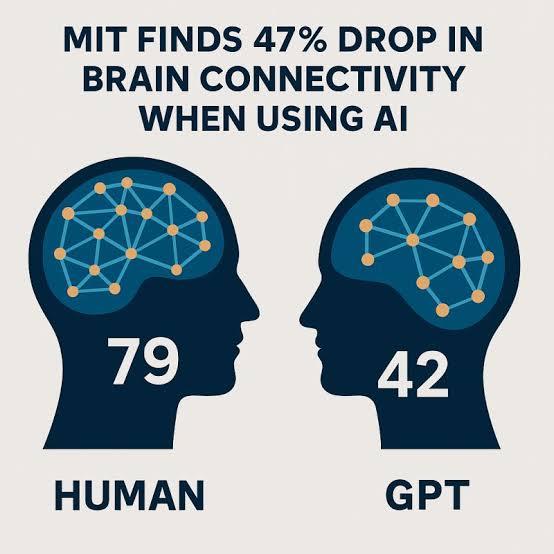
Reducing AI use preserves human skills, lowers environmental impact, and reduces exposure to biased or unexplainable outputs.
Real-world consequences include lower operational risk, better staff retention of domain knowledge (reported concern by employees in EY research cited by Thomson Reuters, Feb 2026), and reduced compute costs when unnecessary models are retired.
What Is Reducing the Use of AI?
Reducing the use of AI means deliberately limiting AI systems to tasks where they add clear, measurable value and replacing or constraining AI in tasks where human judgment, privacy, or energy costs are preferable.
Getting Reducing the Use of AI Working
Start with an audit, set clear intent and thresholds, remove low-value AI, replace critical decisions with human review, and monitor usage continuously.
Step 1 — Audit AI Usage
Begin with a targeted inventory of AI systems and their purpose: list model, owner, inputs, outputs, and measurable benefit.
Map every tool (chat assistants, recommendation engines, automated scoring) to concrete KPIs, cost, time saved, error rate, and privacy impact, and flag items with unclear benefit for immediate review. Use procurement records, cloud billing, and application logs to quantify runtime and spend.
Step 2 — Define Intent and Thresholds
Set explicit rules for when AI is allowed: purpose, acceptable error rate, and maximum compute budget per task.
Create a short policy that ties each AI use to business intent (speed. Scale, insight) and numerical thresholds, for example, "no automated decision with >5% false-positive rate" or "monthly inference cost per customer must stay under $0.10" — then require exceptions to be approved by a named owner.
Step 3 — Replace Low-Value AI with Simpler Tools or Human Processes
Where AI adds marginal benefit, switch to rule-based systems, templates, checklists, or human review that preserve skills and reduce compute use.
Examples: replace generative text drafts with structured templates plus human editing, swap expensive real-time ML scoring for offline batch flags reviewed by staff, and remove assistant autopilot features that encourage cognitive offloading.
Step 4 — Build Guardrails and Usage Controls
Enforce limits with access controls, rate limits, and billing alerts so AI use can't grow unchecked.
Implement role-based access, API quotas, and spend alerts in cloud accounts; require that new AI projects pass a lightweight "IARF checklist" before production (owner, intent, KPI, sunset date). Tie approvals to the policy from Step 2.
Step 5 — Monitor, Retrain, and Sunset
Continuously measure whether AI still meets the intent and retire models that no longer justify their cost or risk.
Track accuracy, user dependence, compute and energy use, and staff skill indicators; schedule mandatory reviews (every 3–6 months) and archive or delete models that fail thresholds or duplicate simpler processes.
Quick Comparison Table
This table helps decide whether to keep, constrain, replace, or retire an AI system based on effort to change and its effect on human skills.
| Option | Typical Effort to Change | Impact on Human Skills / Risks |
|---|---|---|
| Keep as-is (heavy automation) | Low | High skill erosion, higher compute and bias risk |
| Constrain (quotas, review gates) | Medium | Preserves skills, reduces runaway costs |
| Replace with rule-based systems | Medium | Retains manual decision capability, lower energy use |
| Retire / human-in-loop | High | Restores skills, increases labor cost and latency |
Frequently Asked Questions
Does reducing AI mean losing productivity?
No. Reducing AI use does not automatically cut productivity; it forces explicit trade-offs and often maintains productivity by replacing low-value automation with targeted human workflows.
Measure task completion time, error rates, and staff satisfaction to see whether a human-led process actually performs better for specific tasks.
How can organizations prevent staff from over-relying on AI?
Train staff on failure modes and require human sign-off on critical outputs; embed skill checkpoints into workflows.
Use shadowing (AI suggestions visible but not applied) for a trial period, then require manual decisions for a defined set of cases until confidence is rebuilt.
Will reducing AI use lower carbon emissions?
Yes, when reducing unnecessary training and inference; retiring nonessential models and capping inference can cut compute and energy consumption.
MIT research shows training and tuning costs scale steeply with model size and tuning steps; removing low-value workloads reduces that footprint.
What legal or compliance risks change when reducing AI?
Reducing AI often lowers regulatory exposure by reducing opaque automated decisions, but it increases human accountability and record-keeping obligations.
Keep audit trails for both AI and human decisions to demonstrate compliance with standards such as the OECD AI Principles and any sector-specific rules.
How do you decide which AI to retire first?
Retire tools with unclear KPIs, low user adoption, high compute cost, or documented harms (bias, privacy incidents).
Rank systems by a simple score combining benefit, cost, and risk; start with low-benefit, high-cost items for retirement.
External Resources
- OECD AI PrinciplesProvides ethical principles and guidance for trustworthy AI.
- Microsoft Responsible AICorporate standard detailing reliability, fairness, and accountability practices.
- Project Management Institute (PMI)Guidance on governance and ethics for AI projects.
- Thomson ReutersCoverage of workplace concerns about skill erosion and AI reliance (cites EY research).
Internal Resources
- What Is AI? | Learn all about artificial intelligence — A primer to align stakeholders on what counts as "AI" before the audit starts.
Your Next Step
Run a 30-minute inventory focused on the top 10 systems that consume the most compute or handle critical decisions.
- Open cloud billing and list the top 10 services by inference or training spend in the last 90 days.
- For each, write one sentence: purpose, owner, and the measurable KPI it affects.
- If the purpose or KPI can't be written in one sentence, flag the system for immediate review.
That initial inventory gives a concrete place to start: retire, constrain, or replace the lowest-value items first and schedule policy approvals for anything that stays.
Written byJordan ReedCybersecurity & Technology Writer
Jordan Reed is a cybersecurity and technology writer focused on digital security, data privacy, and emerging security challenges. With 7+ years of experience in cybersecurity research and technology content, Jordan explains complex security concepts in practical, accessible language. His work covers cyber threats, data protection, privacy, AI security, and best practices for staying secure in an increasingly connected world.
Credentials: Cybersecurity Research & Technology Content Specialist
Expertise: Cybersecurity, Data Privacy, Digital Security, AI Security, Risk Management
7+ years of experience